Painting
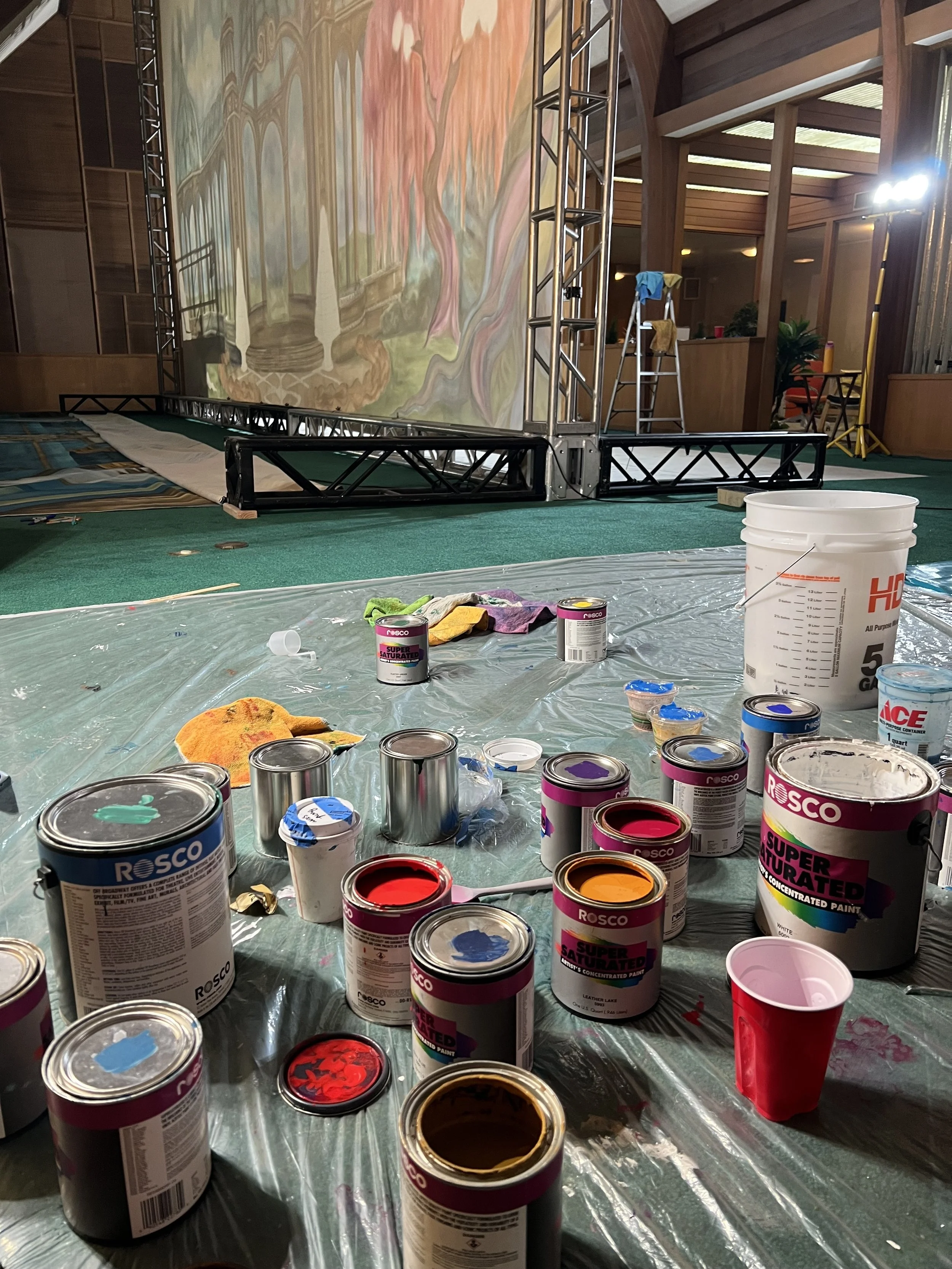
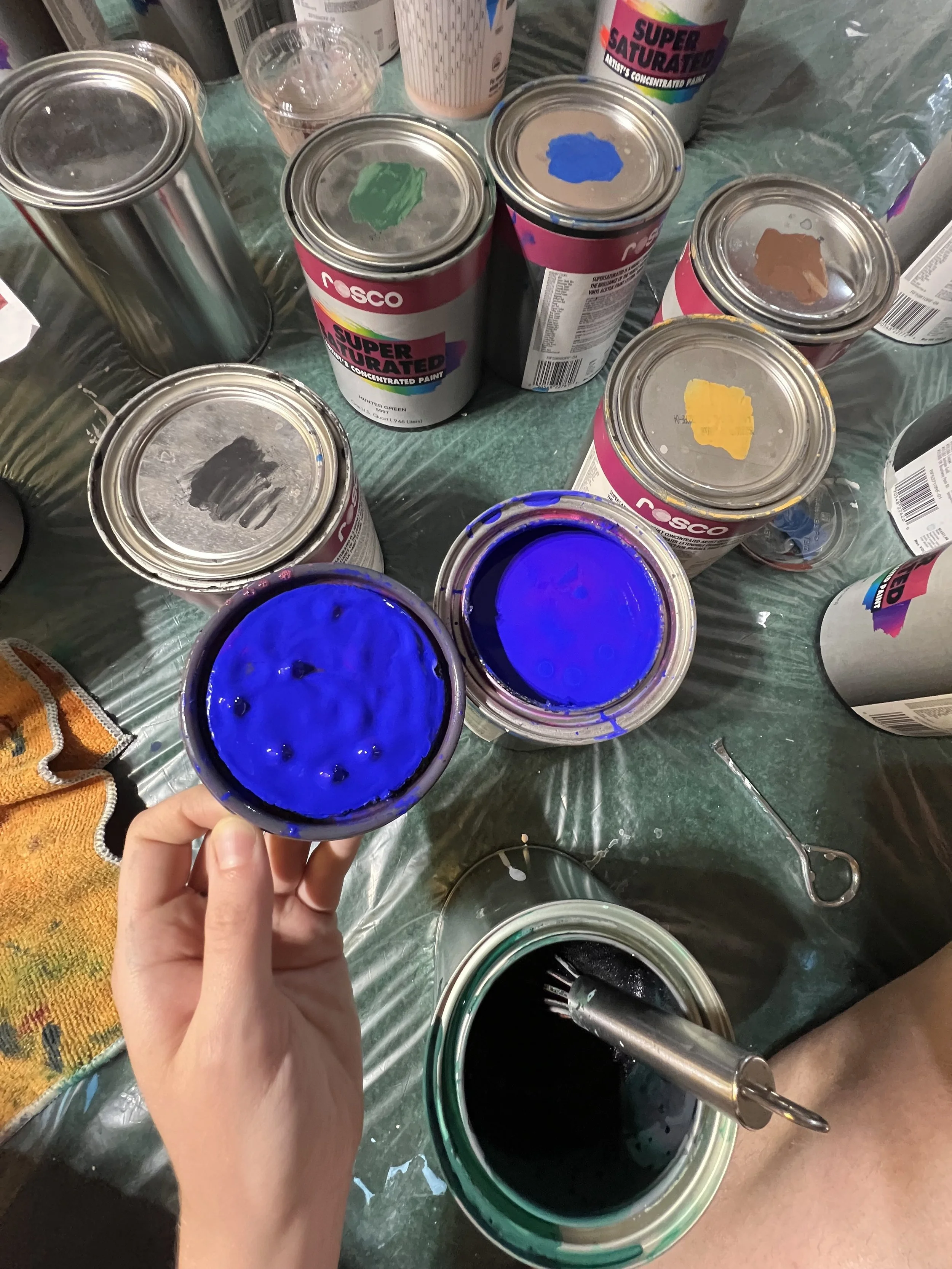
The final phase of the process is painting the muslin. Unlike other large-scale artworks that use oil-based or latex house paint, scenic production relies on specialized water-based paints. These paints can be diluted up to a 10-to-1 water/paint ratio while maintaining full saturation. This heavy dilution allows the paint to absorb deeply into the fabric fibers. If standard paints were used instead, they would sit on top of the surface and eventually crack or peel when the backdrops are folded and transported. Essentially, the muslin is selectively dyed rather than surface-coated.
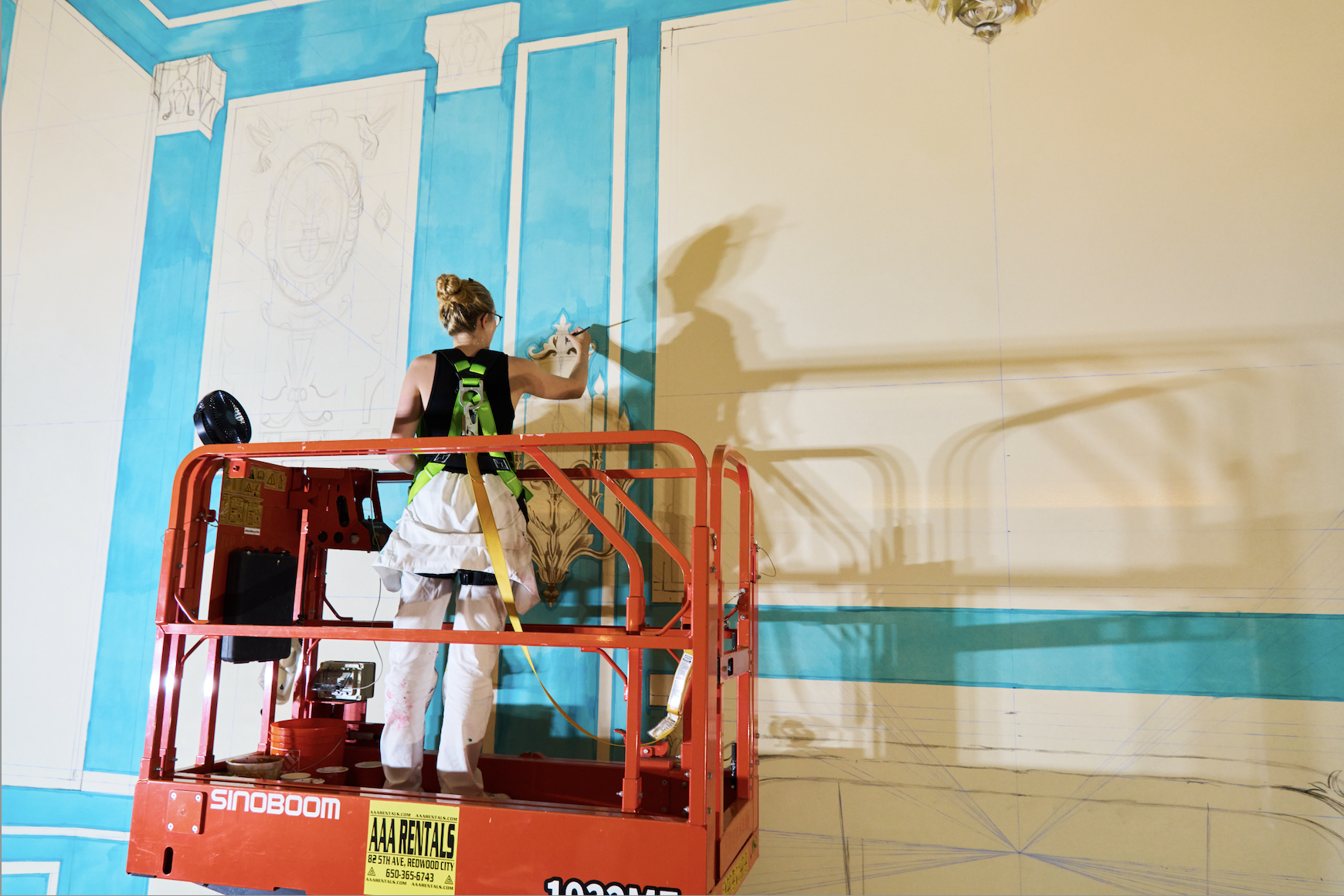
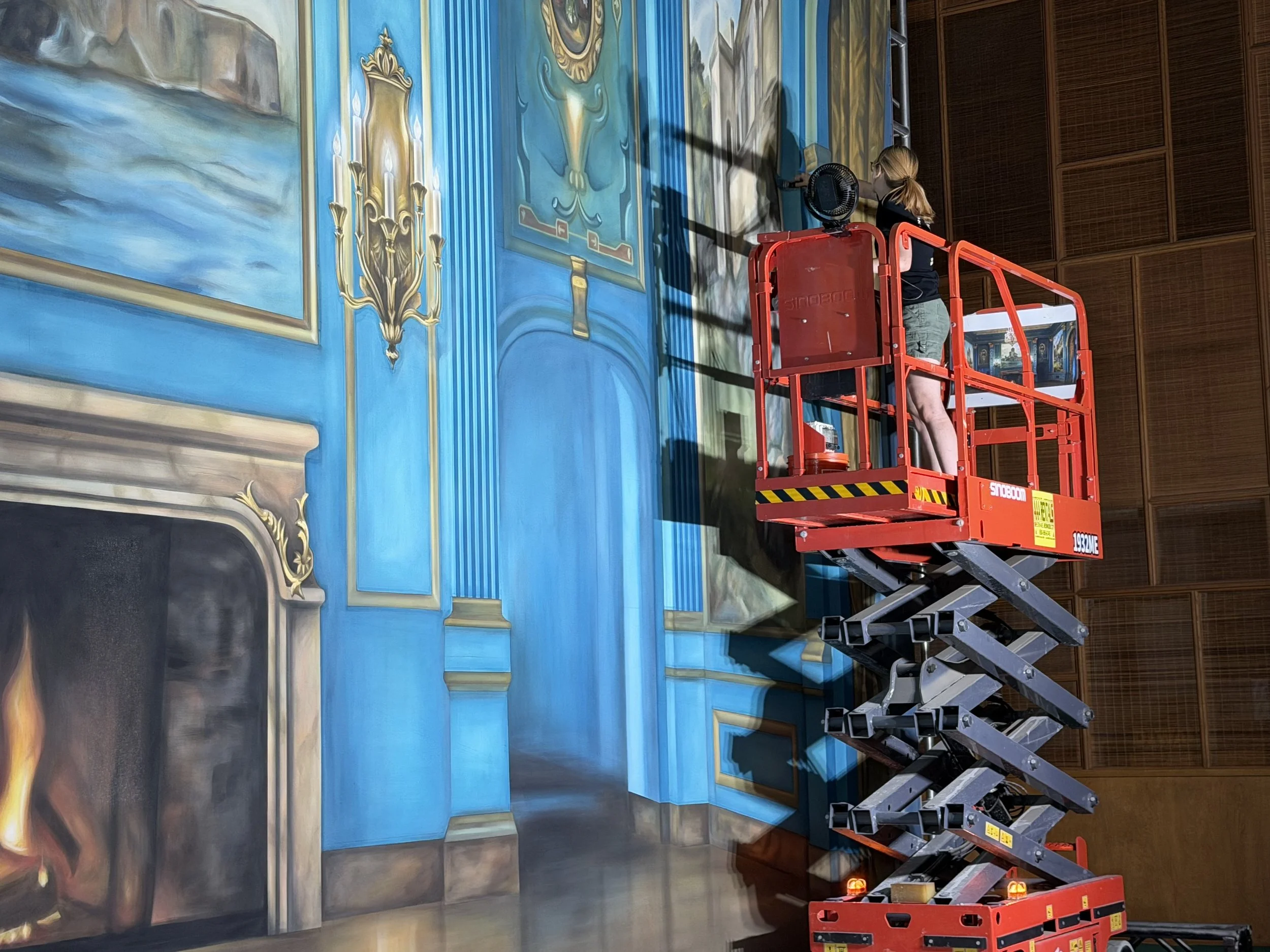
Because the paint is permanent once applied, the artwork is built up carefully through multiple thin layers, much like a watercolor painting. Rather than overworking small sections too darkly too quickly, the entire painting must be developed as a cohesive whole using a variety of brush sizes, rollers, and sprayers as needed.
In addition, meeting strict fire safety regulations is essential. California law requires all hand-painted theatrical backdrops to be certified fire-resistant, which is accomplished by mixing a flame-retardant chemical directly into every can of paint.